Doodle Pens and Paper: What You Need to Start
Any pen works for doodling, but each type behaves differently. Compare fineliners, gel pens, ballpoints, markers and brush pens, learn what tip sizes mean and test a pen for bleed before you use it.
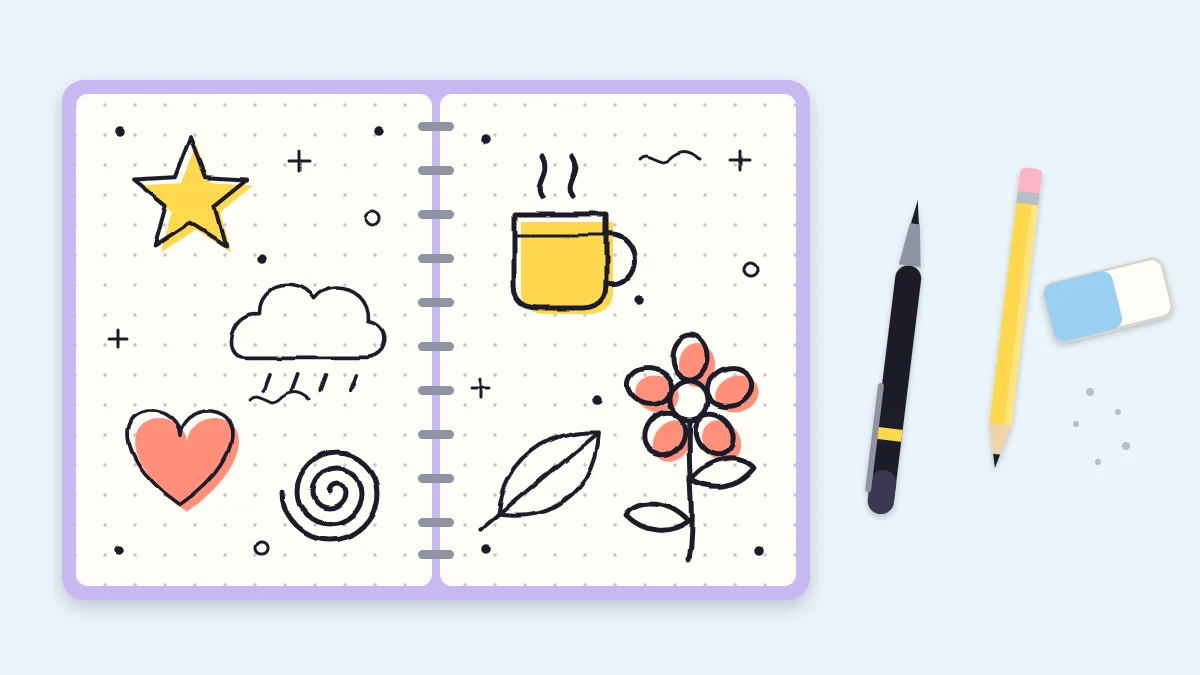
The honest answer to “which doodle pens do I need?” is whatever is already on your desk. A ballpoint and the back of an envelope are enough to start today, and plenty of people never use anything else.
Pens do behave differently, though, and knowing how saves you some smudged pages. Here is a plain comparison of the five common pen types, what tip sizes mean, which paper suits doodling, and a quick test to run before you trust a new pen in a notebook you care about.
Start With What You Have
Doodles are small outlines, so they ask very little of a pen. It needs to make a dark, steady line and feel comfortable in your hand. That is all. If you are brand new, read the beginner guide on how to doodle first and use the nearest pen for a week. You will soon notice what annoys you, such as a line that is too faint or ink that smears, and that tells you what to look for next.
Five Pen Types Compared
These are the types you will find in any stationery aisle. The table describes how each one generally behaves; individual pens vary, which is why the back-page test further down matters.
| Pen type | Line quality | Bleed and smudge | Good for |
|---|---|---|---|
| Fineliner | Thin, even line that stays the same width | Usually dries fast; may show faintly through thin paper | Small doodles, icons, patterns |
| Gel pen | Dark, smooth, slightly wet line | Can smudge until dry | Everyday doodling, bold outlines |
| Ballpoint pen | Lighter line that changes with pressure | Rarely bleeds; may leave a small blob now and then | Margins, thin paper, quick ideas |
| Felt-tip marker | Thick, solid line | Can bleed through thin paper | Headers, bold outlines, filling shapes |
| Brush pen | Swells from thin to thick as you press | Lays down a lot of ink; give it time to dry | Leaves, petals, lively strokes |
A fineliner is the type most people picture when they think of clean line doodles, because its line never changes width. A ballpoint is the most forgiving on cheap paper. A brush pen is the hardest to control and is worth leaving until your hand feels settled.
Tip Sizes in Plain Terms
Fineliners and gel pens are sold by tip size in millimeters. The number tells you roughly how wide the line will be.
- About 0.3 to 0.5 mm: the comfortable range for small doodles. Thin enough for a tiny face or the veins of a leaf, thick enough to stay visible.
- Below 0.3 mm: very fine. Good for tiny details, but the line can look scratchy and faint on its own.
- About 0.7 to 1 mm and up: bold. Use it for outlines you want to stand out, for headers, or for going around a finished doodle a second time.
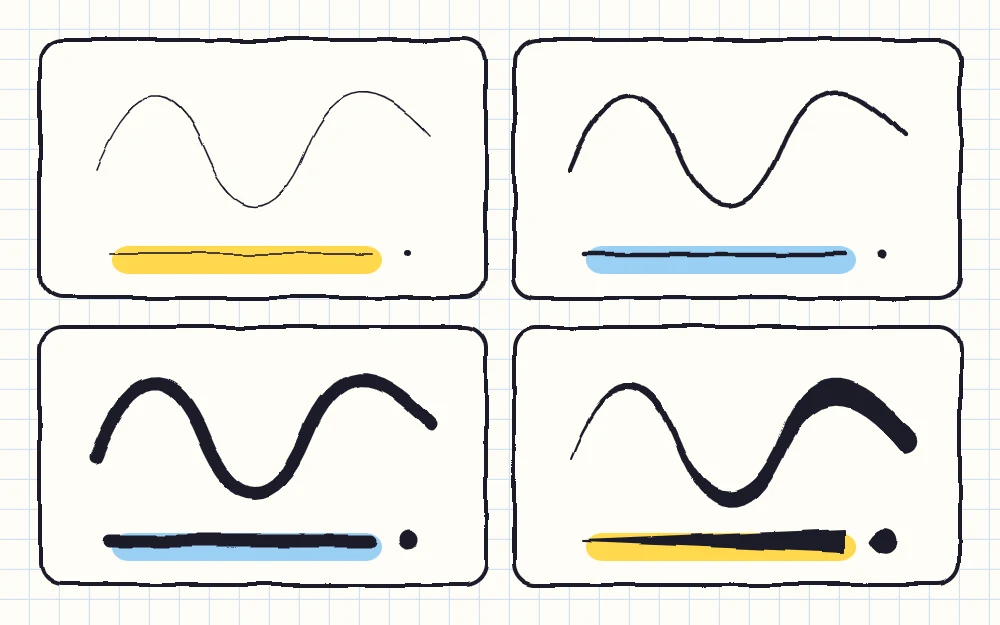
A useful pair is one thin pen and one thick one. Draw the doodle with the thin pen, then trace only the outer edge with the thick pen. The inside details stay light and the shape pops off the page.
Pencil, Eraser and a Highlighter
Most doodles go straight down in pen. A pencil earns its place when spacing matters: a border that has to run straight, a circle for a wreath, a row of icons that should be the same size. Draw a light guide line, doodle over it in pen, wait for the ink to dry, then erase.
Use a soft eraser and a light touch, because hard rubbing can dull the ink.
For color, one or two highlighters or pale markers are plenty. An accent color works best as a flat shape dabbed loosely behind or beside the outline, not carefully filled to the edges. Put the color down first if you can, since a highlighter dragged across fresh ink can smear it.
Which Paper to Doodle On
Any paper works. The four common rulings each do something a little different:
- Plain: nothing competes with your lines. Best for scattered doodles and full-page patterns.
- Lined: what most notebooks have. The lines help you keep rows of doodles level, and the margin is a ready-made strip to decorate.
- Dot-grid: a faint grid of dots that guides spacing and almost disappears behind the ink. A favorite for planners.
- Squared: paper printed with a grid makes geometric patterns, boxes and evenly sized icons easy, because you can count squares.
Thickness matters more than ruling. Thin paper lets markers and wet inks show on the other side, while heavier paper takes almost anything. If you are decorating school or work notes, these notebook doodle ideas show where a small drawing fits on a lined page without crowding the writing.
Test a Pen on the Back Page
Before using a new pen in a notebook, give it a minute on the last page:
- Draw a short line, a small filled circle and a patch of tight scribble.
- Count to five, then drag a fingertip across the line. If it smears, the ink needs longer to dry on this paper.
- Run a highlighter over a second line to see whether the ink lifts.
- Turn the page over. A faint shadow is called show-through and is usually fine. Dark spots that have soaked through are bleed, and that pen is best kept for thicker paper.
Watch out
Gel and felt-tip ink can stay wet longer than it looks. If the side of your hand rests on the page as you draw, work away from fresh lines: left to right if you are right-handed, right to left if you are left-handed.
A Simple Starter Kit
If you want to pick up a few things, this covers nearly every doodle on a page:
- One black fineliner or gel pen, around 0.4 or 0.5 mm
- One thicker black pen or felt-tip marker for bold outlines
- A pencil and a soft eraser for guide lines
- One highlighter in a color you like
- A dot-grid or plain notebook
Once the pen is in your hand, spend five minutes getting used to how it moves. The line warm-ups for steadier strokes are a good way to learn how fast a new pen likes to travel and how much pressure it needs.
Frequently asked questions
What is the best pen for doodling?
There is no single best one. A black fineliner or gel pen with a tip of about 0.3 to 0.5 mm suits most small doodles because the line is dark and even. A ballpoint is perfectly fine too, especially on thin paper where wetter inks might show through.
Why does my pen bleed through the page?
Bleed happens when a pen lays down more ink than the paper can hold, which is common with felt-tip markers and brush pens on thin notebook paper. Try a finer tip, a lighter touch, or thicker paper, and test each new pen on a back page before using it.
Is dot-grid paper better than lined paper for doodles?
It depends on what you draw. Dot-grid paper guides spacing for borders, patterns and rows of icons, and the dots fade behind the ink. Lined paper is fine for margin doodles and decorated notes. Plain paper is the least distracting for scattered doodles and full-page patterns.